Be yourself; Everyone else is already taken.
— Oscar Wilde.
This is the first post on my new blog. I’m just getting this new blog going, so stay tuned for more. Subscribe below to get notified when I post new updates.
Be yourself; Everyone else is already taken.
— Oscar Wilde.
This is the first post on my new blog. I’m just getting this new blog going, so stay tuned for more. Subscribe below to get notified when I post new updates.
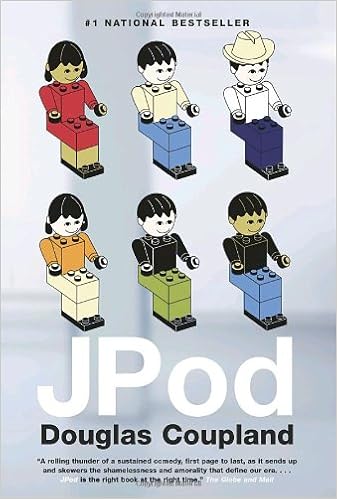
Douglas Coupland’s hit novel JPod explores the features of avant-garde writing and makes fantastic use of inappropriate content. I personally enjoyed this novel as I would consider my sense of humor somewhat dark and twisted. I also started reading this novel with a broad background in both geek culture and technology and found it far more enjoyable than most people would. I found Coupland’s work fascinating and innovative with the stylistic features he chose in incorporate into the story. However, I will admit, most people will find this novel extremely offensive, boring, and confusing.
The start of this novel begins with random numbers, letters, and words that don’t show real meaning. Right off the bat, this can be seen as a confusing feature for many readers. I personally see these pages as a hook to draw curious readers in, and I believe it can be taken both positively and negatively. When progressing through this monstrous 500+ page book, I started to realize that around 100 of these pages are filled with random ads, numbers, or words. To me, these stylistic features were a huge turn off as I listened to this novel through an audio book and there were minute long passages of “3.1415926…”(Coupland 383). It’s easy to assume that a majority of readers would also find this unappealing as the amount of audio book listeners are growing at a rapid rate while physical readers are declining (Rugo 2019). Along with the pages filled with numbers, the novel had an epistolary aspect with emails and interviews. Whenever there is a 10 page interview, every sentence a character says starts with the name of the character. For example:
Kaitlin: What was it?
Mark: I can’t even remember.
Kaitlin: Oh, please. Something shameful?
Mark: [blah blah blah]
(Coupland 438-439)
As many would assume, this gets very annoying.
Beyond the odd stylistic features of this novel, critics claim this novel to be contemporary (Goodreads 2007). The reason behind this is clear as JPod lacks any form of plot or story structure. I found this style of novel to be overwhelming at first as the context behind the narrative didn’t made sense, but as I kept reading, the novel felt as though it was a TV script. I personally enjoyed the novel as I’m open to new experiences, but most people will fail to enjoy this form of novel. As psychologists have come to the conclusion that “familiarity breeds enjoyment“, it’s clear that the average reader may not enjoy this novel (Raghunathan 2012). Upon closer look, it becomes evident that with a novel that ignores story plots or any sense of direction, people will not be able to enjoy it as it lacks familiarity. When I finished reading the story, I was left content, but I felt as though there was no conclusion or purpose to the story. Compared to any other novel I read previously, JPod lacks a moral message. The sole fact that JPod serves no purpose in existing other than temporary entertainment suggests that people wouldn’t be interested in finishing this book. The effect of wanting to find out what happens next seizes to exist in JPod.

Throughout Coupland’s works, a common theme in his novels is the appeal to geek culture. I can often relate to most of the odd video game and movie references he makes in this novel, but in the modern age, I feel as though most readers would not understand the context behind several jokes. Along with these obscure jokes, Coupland is a heartless man as he uses human trafficking and sexuality for humorous content. As I was raised connected to the internet, I have been rather desensitized to most of these jokes and find them borderline humorous, but I know for a fact that many people would get offended by his writing. As older generations refer to the modern generation with a derogatory term, “snowflakes“, this kind of content may be too sensitive for the decade after JPod was initially published (2006). The modern gen of teenagers is often seen as “nice and very sensitive” (Alberge 2018). Topics such as assault, murder, slavery, drugs, trafficking, etc can all be triggering for many individuals as many modern age children are brought up in a violent environment created by previous generations (Alberge 2018).
Although I personally found JPod to be an innovative masterpiece, I completely understand why people dislike this novel and believe most people will end up offended after reading JPod. From severely insensitive humor to unorthodox structuring, I too could argue that this novel is a terrible read, but I choose to see the positive sides. I wouldn’t recommend this novel to anyone that knows nothing about technology or someone that may be sensitive to dark topics. Most importantly, if I were to recommend this book to someone, I would strongly encourage them to buy an e-book or physical copy rather than an audio book.
Works Cited
Alberge, Dalya. “Blame Parents for ‘Snowflake’ Millennials, Says Author Fay Weldon.” The Guardian, Guardian News and Media, 28 Sept. 2018, http://www.theguardian.com/books/2018/sep/28/blame-parents-for-snowflake-millennials-says-author-fay-weldon.
Coupland, Douglas. JPod. Random House Canada, 2006.
“JPod by Douglas Coupland.” Goodreads, Goodreads, 1 May 2007, http://www.goodreads.com/book/show/221059.JPod.
Raghunathan, Raj. “Familiarity Breeds Enjoyment.” Psychology Today, Sussex Publishers, http://www.psychologytoday.com/ca/blog/sapient-nature/201201/familiarity-breeds-enjoyment.
Rugo, Lily. “AAP Reports E-Books Sales Fall, Audiobooks Rise.” Forbes, Forbes Magazine, 21 Feb. 2019, http://www.forbes.com/sites/lilyrugo/2019/02/20/aap-reports-e-books-sales-fall-audiobooks-rise/#555913ee520b.
JPod by Douglas Coupland shows a wide variety of diverse personalities within characters and is formatted in a daily recording style. The novel doesn’t really have much structure as it’s a in diary style. I personally enjoyed JPod from the beginning to the end, but I wouldn’t recommend the book to people that lack a sense of humor as it makes jokes ranging from Chinese human trafficking to lesbian cults. The originality of this novel can be seen in a reoccurring idolization towards Ronald McDonald, as he is used as inspiration throughout the Jpodder’s works. Due to the odd nature of JPod, it’s kind of difficult to relate it to Archetypal Theory, but with the flavorful characters it wasn’t as bad as I thought.
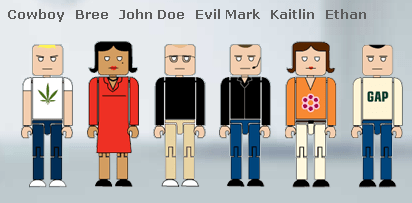
Ethan Jarlewski is the main character in this story and all the events revolve around him and his peers. Ethan closely resembles the Archetypal character of the Hero. In several events, he is always there to assist those in need and comes in to save the day. From helping his mother bury a body to helping her dig up the same body, he shows courage when conducting illegal business. Ethan isn’t the typical hero and in my opinion he is a budget immoral hero. Most of Ethan’s hero like actions have to do with drugs, illegal money, or hiding bodies. For example, Ethan goes to China to save his missing boss Steve, as he finds him “apparently clam happy, making fake Nikes on one of hell’s more ghastly rungs” (Coupland 316). It turns out his boss is now addicted to heroin and enjoys slave work because he can get his next fix.
Steve Lefkowitz is the new boss hired for the development of a game called BoardX. He ends up falling in love with Ethan’s mom and is later “disposed of” by Kam Fong, an international Chinese businessman. Ethan’s mom, Carol, doesn’t really show interest in him and she asks Kam Fong for a favor. In the beginning of the book, Steve was humorless and very artificial as he suited the ideal “friendly boss” personality. Later when he is working in a bootleg Nike factory in China addicted to heroin, he finally unlocks his own personality and sense of humor. I saw this as an example of the Archetypal plot, rebirth. Steve was very awkward and robotic at first, but after drugs he was reborn into a new authentic Steve. In an interview, when he is questioned about his personality change, he responds with “Pretty freaky, isn’t it?” (Coupland 355).
As Steve and several other slaves are transported by Kam Fong, he is assumed to be a bad person. However, I personally believe Kam Fong shows the Archetypal traits of the Magician and Caregiver. Kam Fong is often seen as a reliable friend as Ethan’s dad, Jim, considers asking Kam to dispose of his affair partner and claims, “He’s such a can-do sort of guy” (Coupland 323). Kam is also extremely wealthy as he manages various “government” activities. He showed Ethan gratitude for housing his Chinese “friends” by gifting him “over fifty thousand dollars worth of premium lacquered maple furniture” (Coupland 148). It never states where he gets all his money from, but he always seems to magically produce thousands of dollars, hence the character Magician. Kam also shows his care giving traits as he “put a quarter-pound of medicinal-grade cocaine into the jCola” to liven up the party full of socially awkward people (Coupland 343).


Another character that reflects an Archetypal trait is “Cancer Cowboy“. Cowboy (Casper Jesperson) is often in trouble as he is addicted to drinking cough syrup and tries to impress girls. Cowboy recalls the events of a particular night as he claims, “I was in a fourgy with these three BMX chicks I met last weekend, and it was a dream come true, and then this one chick puts on a Raggedy Ann wig and a red foam nose, and says, Look at me, I’m Ronald McDonald, and I freaked” (Coupland 183). Cowboy obviously resembles the Jester or Joker character as he is free and careless throughout the novel. He is often in unimaginable situations and is seen as a jokester.
Bree (Brianna Jyang) is another member of Jpod and she is a clear representation of the seducer or lover. Right off the bat, in her Cartoon Profile, Jpod claims her most evident pathology is that she “makes no bones about the fact that she wants to sleep with almost every guy she meets, but only once” (Coupland 34). She also signs off on a letter to Ronald McDonald with “Call me. Your little tease, X Bree”.

/arc-anglerfish-tgam-prod-tgam.s3.amazonaws.com/public/FHQE3EV7P5E7XAHJP3XCN6TYIQ)
I find this novel extremely amusing as the Douglas Coupland breaks the fourth wall and includes himself in the story. I think that Douglas is a clear representation of the devil in this novel. He makes various appearances to make a deal with Ethan. In all of these encounters, he always offers a deal to Ethan. During Ethan’s rescue mission in China, he is saved by Douglas when stranded without food and water in a quarantine zone. Douglas offers him help but tells them, “if I get you guys back to Shanghai, then you have to give me your laptop computer, period” (Coupland 324). Later, Douglas offers him a better job on the same condition. “I want your new laptop, the one you bought after you returned from China” (Coupland 513). I found it interesting how Douglas Coupland always asked for Ethan’s laptop, but later it is revealed that he needs the content from the laptops to write a book. I interpreted this as Douglas writing JPod using material from Ethan’s laptop.
Overall, after finishing the masterpiece known as JPod, I was left enlightened. The novel portrays very different characters including a fast food clown, an ultra lesbian cult leader, and a Chinese drug overlord. I think all of these unique characters overcame the Archetypal standards of repeating structure. As JPod didn’t show any real structure, it was a new experience for me and I can tell you that it lives up to its standards. I highly recommend this book for anyone that isn’t normal or has a twisted sense of humor. I personally rate this book 10/0 to fit in with the ridiculousness of the novel.
Works Cited
“12 Character Archetypes Every Writer Should Already Know.” Reedsy, 10 May 2019, blog.reedsy.com/12-common-character-archetypes-every-writer-should-already-know/.
“99 Archetypes and Stock Characters Screenwriters Can Mold.” ScreenCraft, 4 Feb. 2019, screencraft.org/2018/07/09/99-archetypes-and-stock-characters-screenwriters-can-mold/.
Coupland, Douglas. JPod. Random House Canada, 2006.

The podcast Serial by Sarah Koenig investigates the mysteries behind Hae Min Lee’s murder and why Adnan Syed may have been innocent. When analyzing this podcast alone, Sarah does a masterful job in influencing the listener to support Adnan’s innocence and it can obstruct neutrality in this case. As a precaution, I did some research of my own and came to the conclusion that the evidence does indeed support Adnan’s innocence. A lot of the evidence used in this trial is inconsistent and unreliable, but the greatest factor in my decision comes from recent DNA tests that suggests Adnan may have been falsely convicted (Considine 2019).
Upon listening to the podcast, the biggest thing that stood out to me was how unfair Adnan’s trail was. Adnan’s attorney, Cristina Gutierrez, failed to investigate an alibi Asia McClain, but she was the only countering evidence to Jay Wilds’ claims. Cristina never contacted Asia, but strangely enough she told Adnan that she did (Woolf 2015). Apart from lying to her client, she also failed to cross-examine the prosecution’s cell tower evidence which was deemed as unreliable to many other lawyers (Geiger 2019). It would be quick to assume his lawyer was unjust, but one thing is for sure, she failed to do a good job in defending Adnan. Cristina is later disbarred due to her poor performance in which some suggest her multiple sclerosis may have caused this (Geiger 2019). Although the reasoning behind Cristina’s poor performance is unclear, one thing remains. Adnan did not get a fair trial. Legally, the trial can be seen as fair and just, but both morally and ethically, it is clear that with a different defense attorney, the outcome could’ve been drastically different.

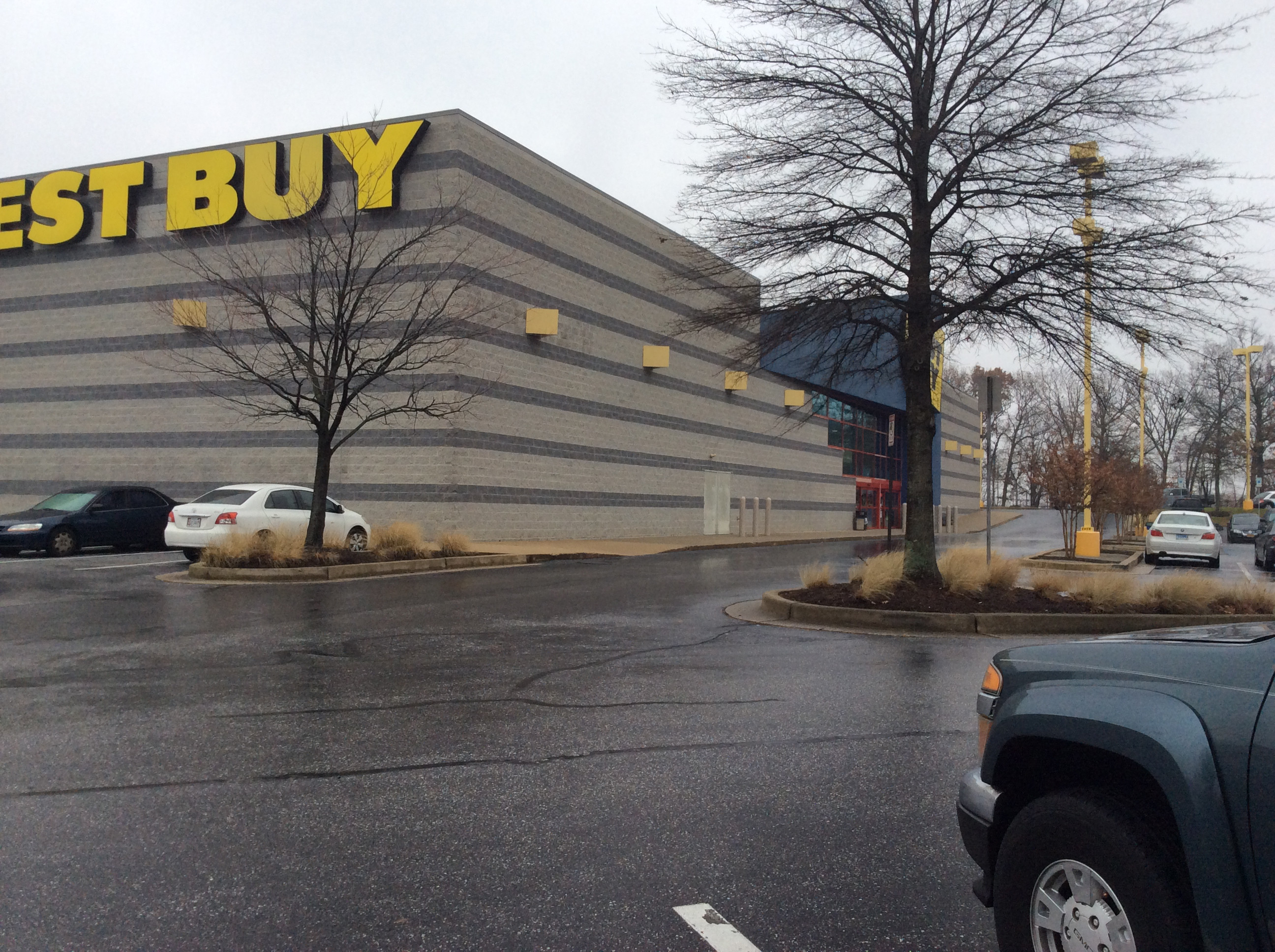
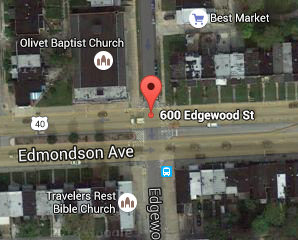
Another source of unreliable evidence in this case is Jay Wilds. Throughout three interviews and a trial, Jay’s story is always changing. Some significant changes can include the location where Jay was shown the body, the location they get shovels from, and most importantly the times of this event. In Jay’s first interview, one important piece of evidence he mentions is that Adnan called him to meet at a “strip” off Edmondson Ave (Koerber 2015). In Jay’s second interview he claims that Adnan called him to pick him up at Best Buy. From there on, Jay’s description of the next few events do not align with the calls he made and cell tower locations. While the prosecution team used Adnan’s call from Best Buy as evidence of location, it is known that the location of the cell tower covers a general area rather than just Best Buy (Chivvis 2014). In Jay’s description, he claims that Adnan called a friend, Nisha, on the way to Forest Park at 3:32PM. However, the cell tower in that location, “L651C“, doesn’t cover the location Jay mentioned in both his second interview and testimony (Koerber 2015). Along with these subtle differences, the most significant flaw in Jay’s story is in a recent interview where he claims he and Adnan buried the body around midnight. In both interviews and testimony, he made it clear he and Adnan buried the bodies between 6:30PM-7:30PM, but his recent interview with “The Intercept” there is a 4-5 hour difference in time compared to his original claims (Cooper 2014). If I were the witness of a murder committed by my friend, I along with many others in the same scenario would remember the events clearly. The fact that Jay Wilds’ stories are so inconsistent in both time and location suggests that he never helped Adnan hide Hae’s deceased body. I personally believe Jay was a bigger suspect regarding Hae’s death. (A timeline of events)

All these previous facts are mentioned in the podcast, but with recent investigations, the greatest factor that leads me to believe Adnan Syed did not murder Hae Min Lee is the lack of his DNA in the crime scene. I find it hard to believe that Adnan Syed has the mentality of a criminal mastermind and wore gloves and a hairnet when killing Hae Min Lee. A recent DNA test done on Hae Min Lee’s fingernail clippings, clothing, and necklace all deny the fact that Adnan strangled her (Considine 2019). Along with her body and clothing, a DNA test was done on samples taken from Hae Min Lee’s vehicle. This leads me to believe that Adnan has been framed for a crime he didn’t commit. However, on the odd chance that someone argues that Adnan planned a perfect crime, there are some facts that don’t line up. Firstly, in Jay Wilds’ second interview, he claims that he and Adnan wiped their fingerprints off of the shovels used to bury Hae, but later in is more recent interview, he claims that after Adnan drove off with Hae’s car and came back wearing gloves (Koerber 2015). The fact that Adnan had gloves strongly suggests that he would’ve used them throughout the whole operation which removes the need of wiping fingerprints. In further investigations regarding Hae Min Lee’s vehicle, there were fingerprints found on the rearview mirror, but they did not belong to Adnan. Upon conducting a system scan, the fingerprints were not in the criminal database (Considine 2019).
In addition to DNA tests, the autopsy reports of Hae Min Lee also differ from the evidence the prosecution team provided. A proper autopsy reported signs of a “phenomenon called lividity” (Considine 2019). Lividity is described as blood settling after a person dies, which means her body must have been still for 12 hours somewhere other than her burial grounds (Considine 2019).

Lastly, Jay Wilds makes his return with yet another claim. In Jay’s new statement he claims that the police coached his second interview (Considine 2019). This interview holds the key point the prosecutor used to prove Adnan guilty. According to Jay, the police told him to say that their meeting point was in a Best Buy parking lot, not the strip of Edmondson Avenue. Thus, if this is true, all of the evidence used against Adnan’s innocence was forged, but if this is false, it proves that Jay Wilds has a tendency to lie.
After a days worth of investigating, I came to a conclusion that Adnan Syed is most likely innocent. “Innocent until proven guilty” is a phrase often used in law, but in the murder of Hae Min Lee, nobody was truly proven guilty. Jay Wilds’ inconsistent locations, times, and accusations of police forgery all lead me to believe that there truly wasn’t enough evidence to convict Adnan. One of the reasons Adnan was convicted with this weak evidence is due to his defense attorney Cristina Gutierrez. With all of these unfortunate events combined, Adnan Syed is to this day in Baltimore prison while most of society believes he is innocent. Adnan was recently denied a retrial, but is still holding on to this hope Serial has brought him. I believe that Adnan deserves a fair trial as soon as possible, but with current circumstances another retrial is in works (Adnan Syed Updates 2019).
Works Cited
“Adnan Syed Updates.” Brown Law, 1 July 2019, cjbrownlaw.com/adnan-syed-updates/.
Chivvis, Dana. “The Best Buy Maps.” Serial, serialpodcast.org/posts/2014/11/the-best-buy-maps.
Considine, Austin. “’The Case Against Adnan Syed’: Finale Reveals New DNA Test Results.” The New York Times, The New York Times, 1 Apr. 2019, http://www.nytimes.com/2019/03/31/arts/television/case-against-adnan-syed-dna-hbo-finale.html.
Cooper, Natasha Vargas. “Exclusive: Jay, Key Witness from ‘Serial’ Tells His Story for First Time, Part 1.” The Intercept, 29 Dec. 2014, theintercept.com/2014/12/29/exclusive-interview-jay-wilds-star-witness-adnan-syed-serial-case-pt-1/.
Engel, Pamela. “Law Students Identified Another Possible Suspect In The ‘Serial’ Murder Case.” Business Insider, Business Insider, 22 Dec. 2014, http://www.businessinsider.com/another-suspect-identified-in-serial-murder-case-of-hae-min-lee-2014-12.
Geiger, Dorian. “What Happened To Adnan Syed’s First Attorney, Cristina Gutierrez?” Oxygen Official Site, 15 Mar. 2019, http://www.oxygen.com/martinis-murder/crime-time/what-happened-adnan-syed-attorney-cristina-gutierrez-ineffective-counsel.
Koerber, Brian. “Beyond ‘Serial’: Unraveling Jay’s Stories.” Mashable, Mashable, 1 Jan. 2015, mashable.com/2015/01/01/jay-serial-stories/.
Woolf, Nicky. “Key Witness in Serial Case Asia McClain Says Prosecutor Suppressed Testimony.” The Guardian, Guardian News and Media, 20 Jan. 2015, http://www.theguardian.com/tv-and-radio/2015/jan/20/key-witness-adnan-syed-serial-asia-mcclain.
After reading a portion of JPod by Douglas Coupland, I was left both impressed and confused. I can’t decide whether to refer to his works as a novel or a series of lucid realities, but one things for sure, it’s captivating. From disposing the body of your mom’s affair partner to having smuggled humans taking a dump in the kitchen, JPod is sure to be unpredictable. The novel doesn’t really have a set plot line as it is a series of events and everyday life shenanigans, but the setting takes place in a video game company with Ethan Jarlewski as the narrator. Ethan and his coworkers are in a team called “jpod” which is due to a program error that puts new employees with the last name starting with “j” in this specific team. The “pod” portion comes from the fact that they all share the same cubicle pod. From the first page, I could tell that this wasn’t a normal book. (For a more in depth summary you can check out Cumberland Public Libraries)
While reading this novel, there were several moments when I thought to myself, “What leads someone to write something like this”. I couldn’t fathom the idea that an average Joe could produce a puzzle of this caliber, so upon further research, I discovered that the novel is built from his personal experiences. Douglas Coupland’s education is quite broad as he dropped out of McGill sciences to pursue art, which is expressed in the character Mark. Mark’s character is often referred to as a blank slate, but as he expresses his individuality, he claims his greatest change happened after realizing he was studying “to please his parents” (Coupland 40). Douglas Coupland’s mother is a graduate of McGill university and as the author tried to follow his mother’s footsteps, he transferred to Art and Design at Emily Carr College (Hume 2017). A big theme in this novel is the diversity of personality and character throughout the team and this reflects the author’s choice to transfer into art. He describes his 4 years in Emily Carr College as the “best four years of his life” (Hume 2017).
/https://www.thestar.com/content/dam/thestar/entertainment/visualarts/2015/01/29/douglas-coupland-an-author-turned-artist-with-no-turning-back/douglas-coupland.jpg)
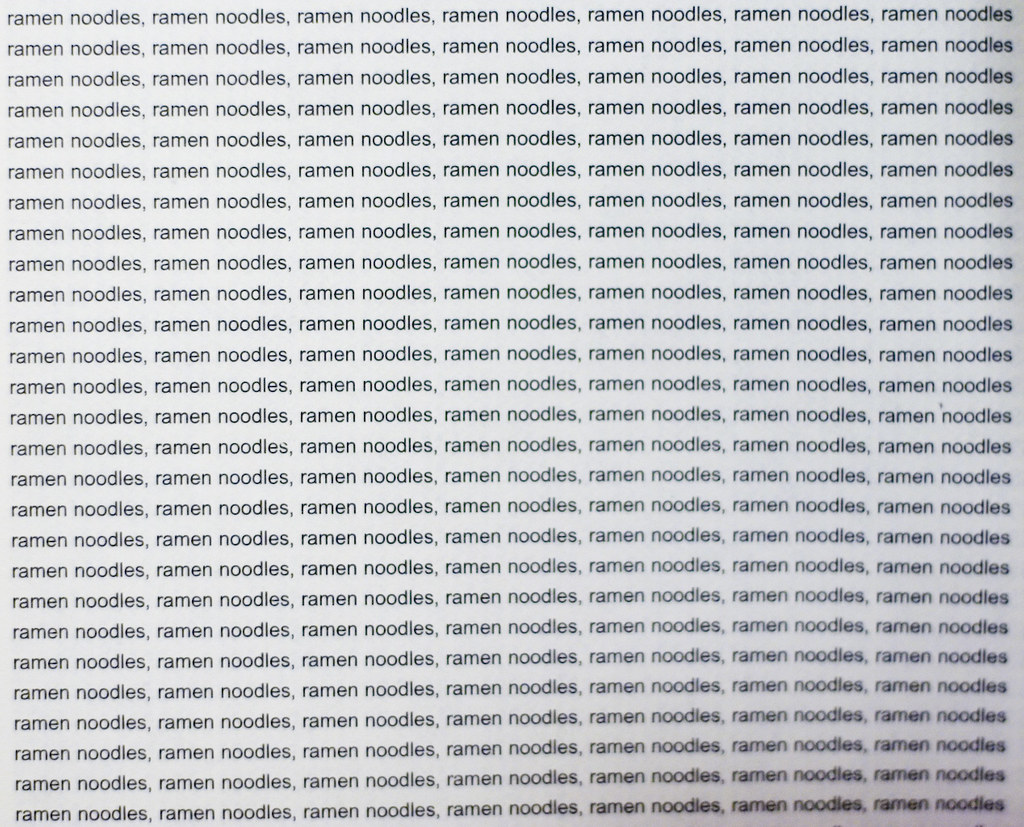
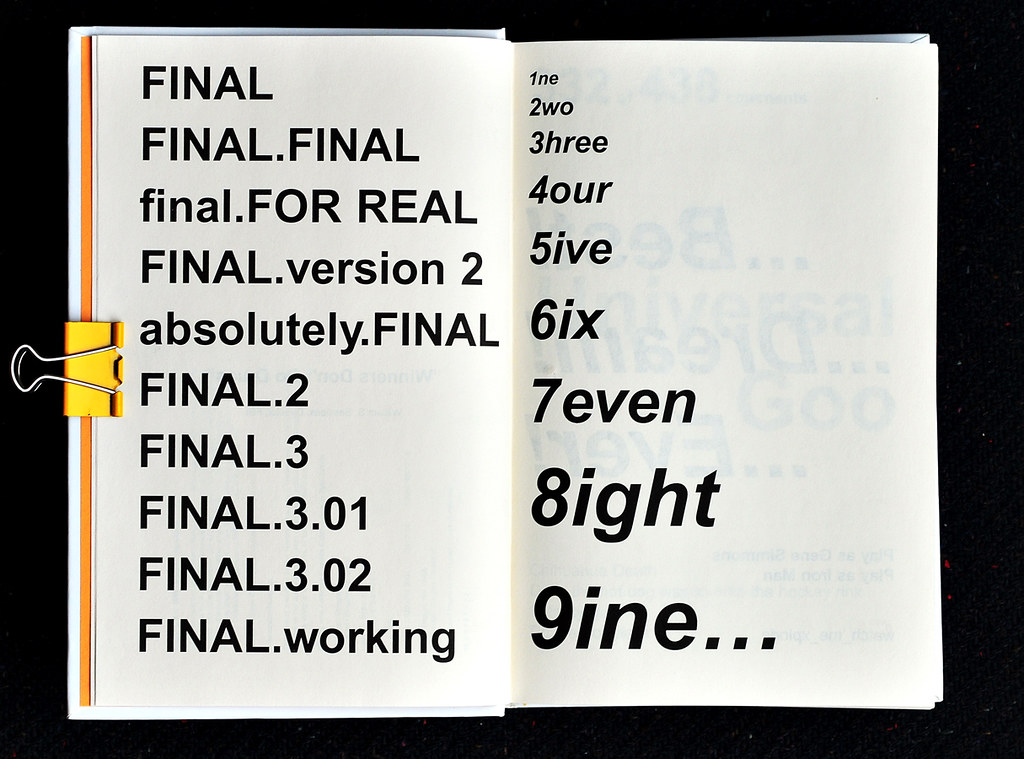
Throughout the novel there are several pages filled with random phrases, ads, emails, and repeated words. As the plot of the novel revolves around computer “geeks”, most of these random pages have hidden meanings. For example, on page 10 of the book, the page is filled with the words “ramen noodles“. This is repeated 364 times and I can assume that this expresses the unhealthy lifestyle of modern youth (Ness 2006). Another page in the novel has the words from a chicken flavored oriental noodle soup package, while some other pages have the title for a CMOS logic and algorithm guide. After 100 pages into the novel, I could tell that this novel reflected the essence of the “geek” culture.

:no_upscale()/cdn.vox-cdn.com/uploads/chorus_asset/file/8170353/the_matrix_path_of_neo_taking_cover_1680.jpg)
The most enjoyable part about reading this novel is the fact that I could relate to most of the characters. Human trafficking and burying bodies in construction zones are a few of many relatable topics, but the most prominent topics are the computer references. Personally, I have a background in technology as I took several computer classes in Saunders and find tech interesting. I understood most of the relevant references in the novel such as the ASCII codes that spell out “edgy” (Coupland 18). The book is scattered with several internet culture references such as penis enlargement ads and movie characters. It’s clear that these references will not make sense to a wide audience nor will it be funny for them, but to readers with backgrounds in tech and internet, these jokes are surprisingly funny. The fact that the book was published over a decade ago and some of the references are still relevant shows the level of maturity in the target audience hasn’t changed much.
I won’t lie. I expected this course to be hellish, and it is, but the one factor that balances out all the tedious discussion and blog posts is JPod. To me, this book created a whole new reality to leisure reading as I could finally relate something stupid I’ve experienced to a book. The sprinkle of dark humor and the chaotic events really changes reading from a chore to an enjoyable time. I can’t wait to read more!
Works Cited
Coupland, Douglas. JPod. Random House Canada, 2006.
Gray, Brenna Clarke. “View of A Conversation with Douglas Coupland: The Hideous, the Cynical, and the Beautiful: Studies in Canadian Literature / Études En Littérature Canadienne.” View of A Conversation with Douglas Coupland: The Hideous, the Cynical, and the Beautiful | Studies in Canadian Literature / Études En Littérature Canadienne, journals.lib.unb.ca/index.php/SCL/article/view/18926/20720.
Hume, Stephen. “Canada 150: Douglas Coupland Defined a Generation.” Vancouver Sun, 24 Mar. 2017, vancouversun.com/news/local-news/canada-150/canada-150-douglas-coupland-defined-a-generation.
Ness, Patrick. “Review: JPod by Douglas Coupland.” The Guardian, Guardian News and Media, 2 June 2006, http://www.theguardian.com/books/2006/jun/03/fiction.douglascoupland.

Although crimes and murder occur daily throughout the world, we have professional investigators and detectives to uncover the truth behind these unfortunate events. However, even with world class investigators, there are a few cases that seem impossible to solve. The murder of Hae Min Lee is one of them. As the popular podcast Serial dives into the details as to how Adnan Syed could have been innocent, I personally believe there was not enough evidence judge him.
Episode 1 of the hit podcast Serial delivers a listening experience beyond what words offer. The communication between the listener and the speaker felt flawless even though it was a one sided conversation. Podcasts are known to be a medium to express authenticity and connect with the audience (Kareh). I loved the use of music as it is used to convey a message to the listener. I felt as though the music was perfectly synced to the mood of the podcast and delivered a signal as to important parts. The plot of this case suited the nature of a podcast as the case did not require visual aid. Sarah Koenig presents Adnan’s case through various recordings and descriptions of locations as everything could be expressed verbally. I think the use of a podcast for investigative journalism or crime related topics is unconventional with modern cases as most of the evidence is either video or photographic proof.

After listening to the first episode of the podcast, I was left with several questions:
Why was Jay not a clear suspect to the police?
Isn’t the lawyer considered unlawful?
How can Adnan be proven innocent?
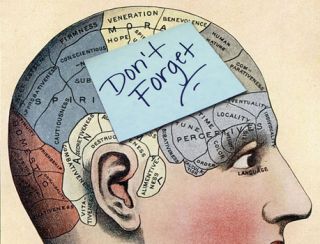
All of these questions are left with loose ends in the first episode, but one point that intrigued me was the experiment revolving around memory. Sarah suggests that people cannot not remember specific details of a certain day without a significant event. At the beginning of the podcast, she proves this by asking several teenagers what they did a last Friday. Upon further research, it is proven that the reason we remember certain things better than others is due to relevancy, unresolved issues, and pain (Radwan). If I were put in a position where I was forced to remember an event from two days ago, I would most likely claim I went to school even though it’s the middle of summer. The fact that most people cannot recall what they did on an uneventful day supports Adnan’s innocence. Adnan could not remember what he did the day of Hae Min Lee’s death, therefore this suggests that he is either insensitive to death, or it was a normal day for him. Following this concept of significant memory, it can also support Jay’s case in which he claims to be shocked in Adnan’s actions. The one relying factor when using this logic is whether Jay is lying or not, but without any other witnesses or sources, it is impossible to confirm his honesty.
After listening a surprisingly addictive podcast and laying out all the evidence and events provided by Sarah Koenig, I have come to a conclusion that the case of Adnan will stay a mystery. Even with the murder remaining a mystery, Adnan should be innocent. According to modern laws, Adnan should have been innocent until proven guilty due to the lack of evidence proving him guilty. The sole fact that nobody else was heard in trial leads me to believe, to this day Adnan was never truely proven guilty.
Works Cited
Charterpedia, and Department of Justice. “Section 11(d) – Presumption of Innocence.” Charterpedia, 17 June 2019, http://www.justice.gc.ca/eng/csj-sjc/rfc-dlc/ccrf-ccdl/check/art11d.html.
Kareh, Ahmad. “How Podcasts Can Lead To Better Connections With Your Audience.” Forbes, Forbes Magazine, 25 Aug. 2017, http://www.forbes.com/sites/forbesagencycouncil/2017/04/11/establish-goodwill-and-credibility-for-a-better-connection-with-your-audiences-by-using-podcasts/#72292fc729d4.
Radwan, M. Farouk. “Why Do We Remember Certain Things but Forget Others.” 2KnowMySelf, http://www.2knowmyself.com/why_do_we_remember_certain_things_but_forget_others.
One thing that all students have in common whether applying for arts, mathematics, or sports in university is the fact that they require English at a university level for admission. Many students including myself dread the course as we ask ourselves, “when am I ever going to use Shakespeare” or blame the teacher for unfair marking. Although I feel the same way about English, I strongly believe that it is the most important course for university regardless of what subject one chooses to study.

To truly acknowledge the importance of English, we have to understand the work ethics, mindset, and workload taught in the course. In my high school experience, English has been the most laborious course by far. The course has always been jam packed with rough drafts, revisions, annotations, and cooperation with peers. Most students realize time management is key to juggle all of these tasks at once. As a student progresses through their journey in high school English, it becomes clear that they improve and refine their skills in managing time. One of the more obvious skills taught in the course is formal writing. Formal writing is always prominent throughout university in different forms such as lab reports or research papers.(Amelia, 2017)

The most important skill taught in English is the ability to think.
English is the only university level course that promotes creativity, innovation, and critical thinking. All other courses in high school tend to follow a strict guideline as to what is right and wrong. Although many students despise this aspect of English, it tends to be the most important feature the course provides. Without creativity and innovation we wouldn’t have any new developments or technology to advance society.(Oswald, 2019) English advocates creativity through writing as a student is free to approach a topic in their own views and beliefs. Critical thinking is slightly different from creative thinking as logic and knowledge are used to paint a picture. The ability to critical think helps students piece together a puzzle to achieve a deep understanding of the topic. These skills become the building blocks for success in university.
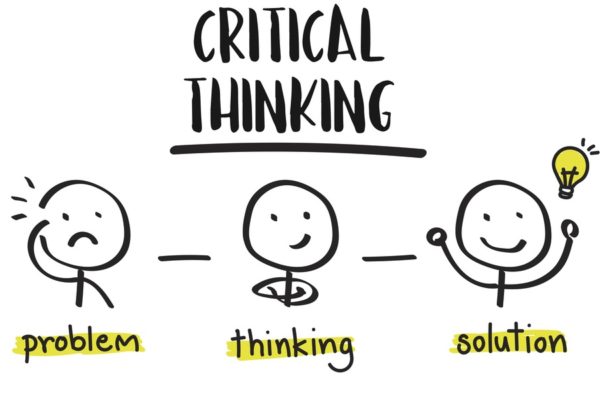
By now its clear that English serves many purposes other than teaching students about the tragedies of Shakespeare. Skills such as time management, work ethics, and, thinking are of essence when striving to succeed in university. Surprisingly, the only course that teaches all of these skills is a requirement for any university program. Although English has been my lowest mark every year, I firmly believe that it is the foundation for success in university and that it should stay a mandatory course.
Works Cited
Jones, Amelia. “What We Learn In English Class.” The Odyssey Online, 30 Aug. 2017, http://www.theodysseyonline.com/what-we-learn-in-english-class.
Edward, Oswald. “Creative Thinking Needed – Letters: The Star Online.” Letters | The Star Online, 26 June 2019, http://www.thestar.com.my/opinion/letters/2019/06/26/creative-thinking-needed/.
 Brandon's Blog